About me
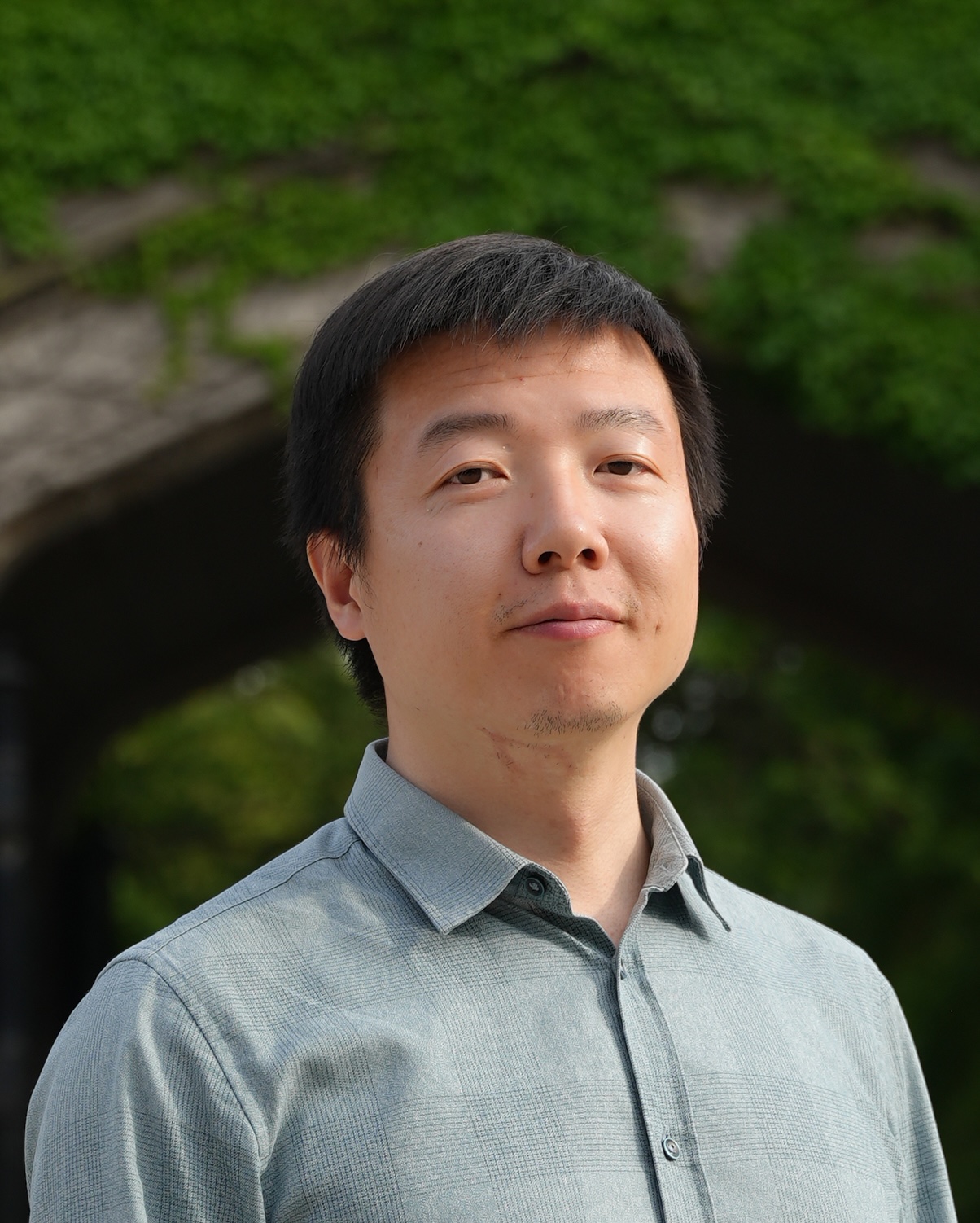
Hi, I’m Xin Xiong.
I am a Postdoctoral Research Fellow at Hong Kong Baptist University. I develop machine learning and statistical methods to study cellular heterogeneity and tumor-immune interactions from transcriptomic and other omics data.
Research Focus
My research addresses a central challenge in cancer biology: bulk tumor RNA sequencing combines signals from different cell types into a single expression profile, obscuring cellular heterogeneity. Computational deconvolution provides a way to infer cellular composition from these mixed signals.
Building on my doctoral work on DeSide, I am developing a generative model based on a variational autoencoder (VAE) to jointly infer cell-type proportions and reconstruct cell-type-specific gene-expression profiles from bulk solid-tumor transcriptomic data, using single-cell RNA-seq data as a reference.
My broader interests include biological foundation models, dynamical systems, and spatial transcriptomics. I am interested in how these approaches, together with multi-omics integration, can help us understand gene regulation, tumor-immune interactions, and the spatial and temporal organization of tissues. Across these directions, I emphasize interpretable models and systems-level understanding.
News
- Sep 06, 2026 - QClaw literature-tracking system: I am building an automated literature-tracking system based on QClaw, a variant of OpenClaw, to monitor recent advances from journals and arXiv across bioinformatics, cancer biology, and AI for science. The system updates daily through public APIs and email alert parsing. I welcome collaborators interested in improving this tracking system.
Selected Work
- DeSide: A unified deep learning framework for cellular deconvolution in the tumor microenvironment, designed to improve the interpretation of bulk transcriptomic data in cancer studies. Article, GitHub
- Ion mobility collision cross-section atlas: Contributed to a large-scale resource for known and unknown metabolite annotation in untargeted metabolomics, expanding computational support for molecular identification. Article
- MetCCS predictor: Developed a web server for predicting collision cross-section values of metabolites, helping support ion mobility-mass spectrometry based metabolomics analysis. Article
Brief Background
I completed my PhD in the Department of Physics at HKBU in September 2025 under the mentorship of Prof. Liang Tian. My doctoral research led to DeSide, a deep learning framework for cellular deconvolution of the tumor microenvironment.
Earlier, I worked as a research assistant at the Shenzhen Institute of Synthetic Biology under the guidance of Prof. Xuefei Li, where I began studying the tumor microenvironment and cellular deconvolution. Before that, I worked at ZhuLab within the Interdisciplinary Research Center on Biology and Chemistry in Shanghai, contributing to computational tools for metabolomics and mass spectrometry data analysis. I received my bachelor’s degree (BEng) in Bioengineering from Xi’an Polytechnic University and my master’s degree (MEng) in Computer Science from Shanghai Jiao Tong University under the supervision of Prof. Hai Zhao.
Outside of research, I enjoy reading, watching movies, playing badminton, and practicing photography.